
An estimated 16 million Americans live with dry eye disease, and that number continues to climb. If you have ever felt that persistent gritty, burning sensation that no amount of blinking seems to fix, you already understand how much it can disrupt your daily routine. At The Relief Products, we have spent over 35 years developing natural, homeopathic options for people who want relief that works with their body rather than against it. Our Complete Eye Relief Fast Dissolving Tablets and Gentle Eyes Lubricant Eye Drops reflect that commitment, using 100% natural active ingredients to provide temporary relief from symptoms of dryness, redness, watering, and burning.
This guide walks through the natural approaches that can help you manage dry eye symptoms more effectively, from simple lifestyle adjustments and nutrition to choosing the right lubricants and exploring homeopathic support.
Understanding Dry Eye and Why It Happens
Dry eye occurs when the tear film that coats and protects the surface of your eyes stops working properly. A healthy tear film has three layers: an outer oily layer that prevents evaporation, a middle watery layer that provides moisture, and an inner mucus layer that helps tears adhere to the cornea. When any of these layers breaks down, symptoms follow.
The Cleveland Clinic identifies three main types of dry eye disease, and knowing which type you are dealing with helps guide the most effective approach to relief.[1]
| Type | What Happens | Most Common Cause |
|---|---|---|
| Aqueous deficient | Your eyes do not produce enough of the watery layer of tears | Lacrimal gland dysfunction, aging, autoimmune conditions |
| Evaporative | Tears evaporate too quickly from the corneal surface | Meibomian gland dysfunction (clogged oil glands along the eyelids) |
| Mixed | Both insufficient tear production and rapid evaporation occur together | Combination of the factors above |
Common symptoms include burning or stinging, a scratchy or gritty feeling, blurred vision, and, paradoxically, watery eyes. That last one surprises many people. When the oil-producing glands in your eyelids are not working properly, the watery layer evaporates too fast, and your lacrimal glands overcompensate by flooding your eyes with excess tears that cannot solve the underlying problem.
Common Causes and Risk Factors
Dry eye rarely has a single cause. Most people experience a combination of factors that gradually wear down your tears’ ability to do their job.
Lifestyle and environment:
- Screen time: When you focus on a computer, phone, or tablet, you blink significantly less often, and your tears evaporate faster between those infrequent blinks.[2]
- Dry or polluted air: A study of US military veterans found that people living in and around Chicago and New York City were three to four times more likely to be diagnosed with dry eye compared to people in areas with less air pollution. Higher altitudes also increase risk by about 13%.[3]
- Wind and direct airflow: Fans, air conditioning vents, and car heaters blowing toward your face all accelerate tear evaporation.
- Smoking: Cigarette smoke irritates the front of the eye and alters tear composition.
Age and biology:
- Getting older: Dry eye incidence nearly doubles from 3.5% in adults 18 and older to 7.8% in adults 68 and older.[4]
- Hormonal changes: Women experience dry eye more frequently, particularly during and after menopause.
- Contact lens wear: Extended contact lens use can reduce tear stability over time.
Medications and conditions:
- Several common medications can reduce tear production as a secondary effect, including antihistamines and antidepressants as well as blood pressure medications and certain pain relievers.
- Conditions such as blepharitis (eyelid inflammation that blocks oil glands), autoimmune disorders, and thyroid disease can contribute to chronic dryness.
Home Remedies and Lifestyle Changes for Dry Eyes Relief
The most consistently recommended natural strategies for dry eye relief focus on supporting your tear film through daily habits. These approaches may help provide meaningful relief from symptoms, especially when you combine several of them.
1. Warm compresses for oil gland support
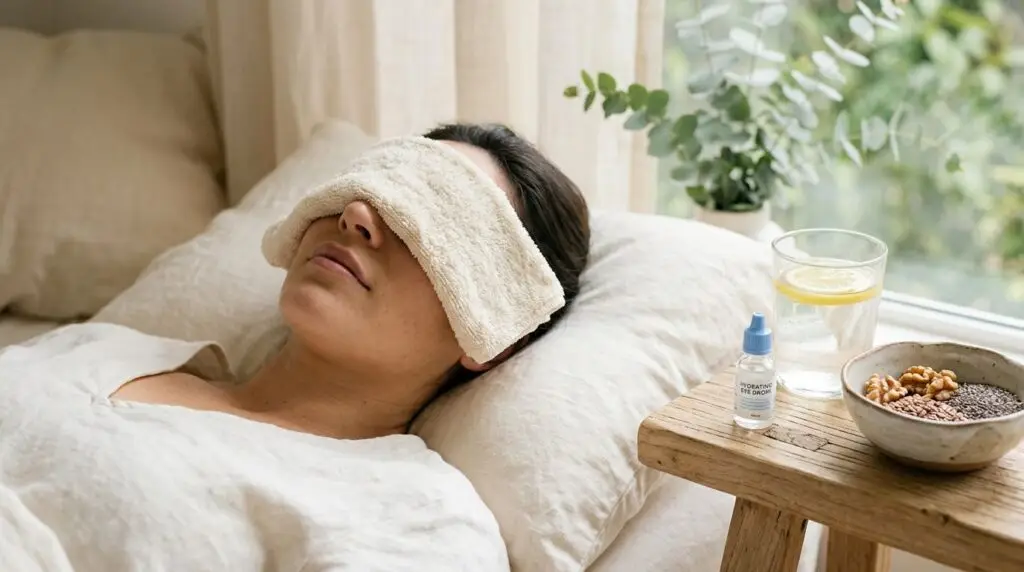
The oil-producing meibomian glands along your eyelid margins can become clogged, reducing the oily layer that prevents tear evaporation. Warm compresses help soften and release that oil. Wet a clean washcloth with warm water, wring it out, and hold it over your closed eyes for at least one minute. Gently press along the edge of your eyelid to help express the clogged oils. Doing this daily, even when symptoms improve, helps maintain oil flow over time.
2. Eyelid hygiene
Clean eyelids reduce inflammation and keep oil glands functioning. Use warm water and a mild cleanser (baby shampoo works well) to gently scrub along the base of your eyelashes. Rinse thoroughly. This simple step removes debris and bacteria that can clog glands and cause irritation.
The next three habits focus on how you use your eyes during the day.
3. The 20-20-20 rule for screen breaks
Every 20 minutes, look at something 20 feet away for at least 20 seconds. This forces you to refocus and blink, refreshing the moisture on your eyes. If you spend long hours at a computer, setting a timer as a reminder can make a real difference. Position your screen below eye level so you do not have to open your eyes as wide, which slows tear evaporation between blinks.
4. Conscious blinking
Practice blinking fully and deliberately, especially during concentrated tasks. Close your eyes normally for two seconds and then open. Close once more and gently squeeze your lids for two seconds before opening again. This exercise helps spread tears evenly and replenishes the moisture layer.
5. Stay hydrated
Your eyes need adequate hydration to maintain tear production. Aim for eight to ten glasses of water daily. If plain water does not appeal to you, other non-caffeinated, non-alcoholic beverages count. Limiting alcohol and caffeine intake can also help, since both contribute to overall dehydration.
Nutrition and Supplements That Support Eye Comfort
What you eat plays a role in how well your tears function. The oil layer of your tears depends on healthy fats, and several nutrients support the glands and tissues involved in tear production.
| Nutrient | Potential Benefit for Dry Eye Symptoms | Food Sources |
|---|---|---|
| Omega-3 fatty acids | May improve oil gland function, supporting the outer tear layer | Salmon, sardines, tuna, walnuts, flaxseed, chia seeds |
| Vitamin A | Supports the mucus layer and overall ocular health | Sweet potatoes, carrots, leafy greens, eggs |
| Vitamin D | Low levels have been associated with increased dry eye symptoms | Sunlight exposure, fatty fish, fortified dairy |
| Vitamin B12 | Supports nerve function in the cornea | Fish, meat, dairy, fortified cereals |
The American Academy of Ophthalmology notes that omega-3 oils improve the function of the meibomian glands, which produce the waxy outer layer of tears that prevents evaporation. You can get omega-3s through diet (fatty fish two to three times per week is a good target) or through supplements. Always discuss new supplements with your healthcare provider before starting, as individual needs vary and over-supplementation can cause its own issues.
Choosing the Right Eye Drops and Lubricants
Not all eye drops work the same way, and choosing the wrong type can actually make symptoms worse. Here is how the main categories compare.
| Drop Type | Consistency | Best For | When to Use |
|---|---|---|---|
| Artificial tears | Thin, watery | Mild to moderate dryness, daily comfort | Throughout the day as needed |
| Gel drops | Thicker, more viscous | Moderate to severe dryness needing longer relief | During the day or before bed |
| Ointments | Thick, greasy | Severe overnight dryness, protective barrier | Bedtime only (blurs vision temporarily) |
Preservative-free vs. preserved drops: If you use eye drops more than four times a day, the Mayo Clinic recommends choosing preservative-free formulations. Preservatives added to extend shelf life can cause irritation with frequent use.[5] Preservative-free drops come in single-use vials that you discard after each application.
One important rule: Avoid drops marketed specifically for reducing redness. These contain vasoconstrictors that shrink blood vessels temporarily but can cause rebound redness and worsen irritation with prolonged use.
Our Gentle Eyes Lubricant Eye Drops provide temporary relief from symptoms of eye dryness and irritation using a gentle, preservative-free formula. For people looking for topical moisture alongside internal support, pairing lubricant drops with our Complete Eye Relief tablets addresses discomfort from both directions.
Environmental Adjustments for Dry Eye Comfort
Small changes to your surroundings can reduce the environmental triggers that aggravate dryness and irritation.
- Use a humidifier in rooms where you spend the most time, especially during winter when heating systems dry out indoor air. Cool-mist humidifiers work well year-round.
- Position air vents away from your face. Redirect car heaters, desk fans, and air conditioning so they do not blow directly toward your eyes.
- Wear wraparound sunglasses outdoors to shield your eyes from wind, dust, and dry air. This is especially helpful in windy climates or during outdoor activities.
- Use a quality air filter if you live in a high-pollution area. HEPA filters in portable air purifiers can reduce airborne irritants that contribute to eye surface inflammation.
- Reduce screen glare by adjusting monitor brightness, using anti-glare screen protectors, and ensuring your workspace has balanced lighting.
Natural and Homeopathic Approaches to Dry Eye Symptoms
Most conventional approaches to dry eye focus exclusively on topical solutions applied directly to the eyes, whether drops for daytime use or thicker gels and ointments for overnight relief. These can provide meaningful relief, but they only address part of the picture. Homeopathic medicine takes a different approach by supporting the body’s own healing processes from the inside out.
Homeopathic remedies use highly diluted natural substances, prepared according to the Homeopathic Pharmacopoeia of the United States (HPUS), to encourage the body’s natural responses. For eye conditions specifically, this internal approach is worth understanding. When FDA warnings and recalls pulled several homeopathic eye drop brands from shelves due to contamination concerns, it created a gap for people who preferred natural options. Our Fast Dissolving Tablets filled that gap by providing a different delivery method altogether.
Our Complete Eye Relief Fast Dissolving Tablets provide temporary relief from symptoms of common eye irritations, including dryness, redness, watering, and burning. The tablets dissolve on or under the tongue in seconds, allowing the natural active ingredients to absorb through the oral mucosa without needing water or any application technique. This makes them practical wherever you are, whether at work, traveling, or simply preferring not to use topical drops.
The real advantage comes from combining approaches. Using lubricant drops for immediate surface moisture alongside Fast Dissolving Tablets for internal support gives your eyes relief from multiple angles. Both products are manufactured under CGMP (Current Good Manufacturing Practices) standards with natural active ingredients, so they can be used together as part of a comprehensive daily routine.
When to See an Eye Care Professional
Natural approaches work best as a complement to professional medical care. Your eye care provider should always be part of your overall strategy, especially if symptoms persist or change.
Schedule an appointment if you experience:
- Persistent dryness, burning, or irritation that does not improve after several weeks of consistent home care
- Worsening pain, significant redness, or sudden sensitivity to light
- Vision changes, including increasing blurriness that affects daily activities
- Signs of infection such as discharge, crusting, or swelling around the eyes
- Symptoms that interfere with your ability to work, drive, or read comfortably
Dry eye is a chronic condition, and finding the right combination of approaches sometimes takes time and professional guidance. An ophthalmologist or optometrist can identify the specific type of dry eye you have and recommend targeted options that complement your natural care routine.
FAQs About Dry Eyes Relief
Can dry eyes be permanently fixed?
Dry eye is a chronic condition that does not have a permanent cure, but it can be effectively managed. Most people find significant relief through a combination of lifestyle changes, proper lubrication, nutritional support, and consistent daily habits. The goal is long-term comfort, not a one-time fix.
What is the fastest way to relieve dry eyes?
Preservative-free artificial tears or lubricant eye drops provide the quickest temporary relief by adding moisture directly to the eye’s surface. For longer-lasting comfort, pair drops with a warm compress held over closed eyes for one to two minutes to help release natural oils from your eyelid glands.
Can screen time cause dry eyes?
Yes. Focusing on screens reduces your blink rate, which means tears evaporate faster and are not replenished as often. The 20-20-20 rule (looking at something 20 feet away for 20 seconds every 20 minutes) is one of the simplest ways to counteract this effect.
Are natural eye drops effective for dry eyes?
Natural lubricant eye drops can help ease dryness and irritation. The key is choosing a preservative-free formula if you plan to use drops frequently. Our Gentle Eyes drops use a preservative-free formulation designed for regular use.
What foods help with dry eye symptoms?
Foods rich in omega-3 fatty acids support the oil-producing glands in your eyelids. Good sources include salmon and sardines as well as walnuts and flaxseed. Vitamin A from sweet potatoes and leafy greens supports the eye’s surface, while adequate water intake keeps your body hydrated enough to maintain healthy tear production.
Finding effective dry eyes relief is rarely about a single product or habit. It is about building a daily routine that supports your tear film from multiple directions: keeping your eyelids clean, nourishing your body with the right nutrients, choosing the right lubricants, adjusting your environment, and considering natural options that work with your body’s own processes. At The Relief Products, our commitment over more than 35 years has remained the same: providing effective, natural options manufactured under CGMP standards using 100% natural active ingredients. Our eye care products are available at major retailers including Walmart and Walgreens, as well as through our online shop.
References
[1] Cleveland Clinic medical team. “Dry Eyes: Types, Symptoms, Causes & Treatment.” Cleveland Clinic, 2025. https://my.clevelandclinic.org/health/diseases/24479-dry-eye
[2] Yale Medicine, featuring Dr. Gargi Khare Vora. “Dry Eye Is on the Rise: Here’s How to Get Relief.” Yale Medicine, 2025. https://www.yalemedicine.org/news/dry-eye-relief
[3] Kierstan Boyd, reviewed by Devin A Harrison MD. “Remedies to Reduce Dry Eye Symptoms.” American Academy of Ophthalmology, 2024. https://www.aao.org/eye-health/tips-prevention/dry-eye-tips
[4] JAMA Ophthalmology researchers. “Prevalence of Dry Eye Disease Among US Adults.” JAMA Ophthalmology, 2022. https://jamanetwork.com/journals/jamaophthalmology/fullarticle/2797832
[5] Mayo Clinic Staff. “Dry eyes – Diagnosis & treatment.” Mayo Clinic, 2022. https://www.mayoclinic.org/diseases-conditions/dry-eyes/diagnosis-treatment/drc-20371869