
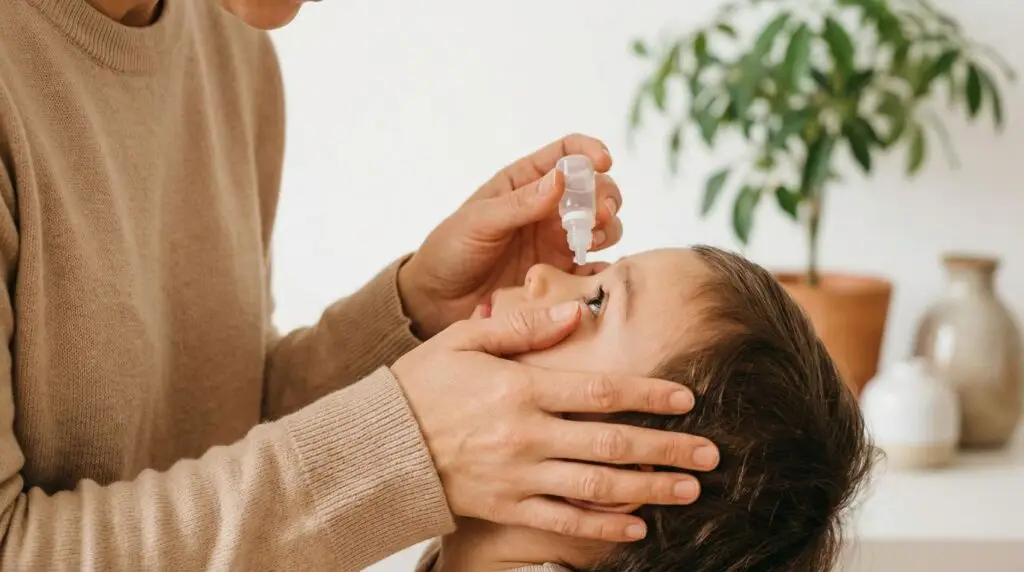
For many parents, the hardest part of treating a child’s eye discomfort has nothing to do with the condition itself. It’s getting the drops in. Every parent who’s faced a squirming toddler knows this challenge. The dropper hovers, your child’s eyes squeeze shut, and suddenly what should take seconds turns into a 10-minute standoff.
The frustration is real, but so is the solution. Pediatric hospitals and ophthalmologists have developed techniques that bypass the struggle entirely. At The Relief Products, we hear from parents regularly about what to do when their kid gets pink eye, and the administration challenge comes up again and again. The technique that works most reliably doesn’t require your child to cooperate at all.
How to Prepare for Child Eye Drop Application
Preparation makes the difference between a smooth experience and a stressful one. Before you bring your child into the process, set yourself up for success.
Gather your supplies first:
- Eye drops at room temperature (cold drops can startle)
- Clean tissues or cotton balls
- A comfortable, flat surface (bed, changing table, or carpeted floor)
- A light blanket for swaddling if needed
- A small reward or favorite toy
Wash your hands thoroughly with soap and water. Clean hands prevent introducing bacteria to already irritated eyes.
Create a calm environment. Turn off the TV, silence phones, and minimize distractions. Young children pick up on parental stress, so take a breath before you begin. Explaining what you’re about to do in simple, reassuring terms helps older toddlers feel less ambushed.
| Preparation Step | Why It Matters |
|---|---|
| Room temperature drops | Cold drops trigger reflexive eye closing |
| Flat surface ready | Proper positioning prevents resistance |
| Hands washed | Prevents contamination and infection spread |
| Calm environment | Reduces child anxiety and parent stress |
| Supplies within reach | Avoids mid-process scrambling |
Simple Steps to Administer Eye Drops Safely
The method recommended by pediatric hospitals sidesteps the biggest challenge: getting a child to hold their eyes open.[1] Instead of fighting that battle, you work with closed eyes.
The Closed-Eye Inner Corner Technique:
- Position your child flat on their back. Use a bed, your lap, or a soft floor surface. Their face should point toward the ceiling.
- Have your child close their eyes gently. Don’t force the eyelids shut; a relaxed close is ideal.
- Hold the dropper bottle vertically about one inch from the eye. Never let the tip touch the eye, eyelashes, or skin.
- Place one drop in the inner corner of the closed eye (the corner nearest the nose). Let the drop pool there.
- Have your child open their eyes or blink. The drop naturally flows across the eye surface. For very young children, you can gently rub the closed eyelid to distribute the drop.
- Press gently on the inner corner for a few seconds after the drop goes in. This punctal occlusion helps the eye absorb the medication rather than draining it into the nasal passages.[2]
- Wipe away any excess with a clean tissue, wiping outward from the inner corner.
Preventing contamination: Never let the dropper tip touch anything. If contact occurs, wipe the tip with an alcohol swab before the next use. When using products like Gentle Eyes Lubricant Eye Drops or any sterile formulation, contamination prevention becomes even more important.
Dealing with Closed Eyes and Non-Cooperation
Even with the inner corner method, some children resist. That’s normal. Here’s how to handle common challenges:
For children who won’t stay still:
The inner corner technique actually works with closed, clenched eyes. As long as you can place the drop in that inner corner, it will flow in when eyes eventually open. A child squeezing their eyes tight creates the exact setup you need for success.
For children who turn their head away:
Position yourself so you’re gently cradling their head with one hand while administering with the other. For very resistant toddlers, the swaddling technique works well: wrap arms and legs in a light blanket to prevent flailing while keeping the face accessible.
Playful distractions that help:
Try asking them to look at a sticker on the ceiling, or count to three together with the drop going in on “three.” Letting them hold a special toy during the process gives them something to focus on. Some parents turn it into a game (“Let’s give your eyes a drink of water”), and offering a small reward immediately after builds positive associations.
If you miss:
One retry is fine. If drops consistently miss, don’t stress. You can attempt again in a few minutes when both you and your child have reset. Multiple failed attempts in a row increase everyone’s anxiety.
The sleeping child option:
For children who resist all waking attempts, the inner corner method works while they sleep.[3] Place the drop in the inner corner of the closed eye, and it will distribute naturally when they shift or open their eyes.
Partner and Solo Administration Techniques
The ideal scenario involves two adults, but single parents manage this successfully every day.
Two-Person Technique:
When two adults are available, one focuses entirely on gentle restraint and reassurance (holding the child flat and secure with arms still and head stable) while the other handles the dropper. This division of labor speeds everything up and reduces total stress time for the child.
Solo Technique (recommended positioning):
Sit on the floor with your back against a wall or couch, then lay your child in your lap with their head resting against your abdomen, facing upward. Their arms should be alongside their body, gently secured under your arm or by your free hand. Their legs extend along yours, and you can wrap one leg gently around theirs to prevent kicking. This position gives you a free hand for the dropper while keeping your child secure and comfortable, mimicking swaddling without requiring an actual wrap.
Consistency matters. If multiple caregivers administer drops, use the same technique each time. Children adjust faster when the routine is predictable.
Tips to Minimize Stress for Children
The goal goes beyond getting the drops in. You’re building a pattern that gets easier over time.
Language that helps:
Simple phrases work best: “This will help your eyes feel better” or “We’re going to count to three and then we’re all done.” Acknowledging effort with “You’re being so brave. This is hard, and you’re doing it” builds trust. One phrase to avoid: “This won’t hurt.” If the drops sting even slightly, your child may not believe you next time.
After the drops:
Immediate positive reinforcement matters more than promises beforehand. Quick rewards that create positive associations include:
- A favorite snack or treat
- Stickers or stamps on a reward chart
- Five minutes of a preferred activity or screen time
- A special “brave kid” high-five ritual
Over time, children come to tolerate (if not enjoy) the routine when they know something positive follows.
Acknowledge their feelings. Saying “I know you don’t like this” validates their experience while you continue the necessary care. Children cooperate better when they feel heard, even during things they can’t control.
Keep sessions short. If you need to do multiple drops throughout the day, quick and confident administration beats prolonged gentle coaxing. Children often adjust better to a predictable 30-second routine than a variable 5-minute negotiation.
Final Thoughts on Natural Remedies for Eye Health
When you’re relieving pink eye in kids and adults naturally, the administration technique matters as much as what you’re administering. The inner corner method works for any type of eye drop, from prescription medications to homeopathic formulas that provide temporary relief from eye discomfort symptoms.
For parents seeking natural options, products like Pink Eye Relief Fast Dissolving Tablets offer an alternative format that eliminates the dropper challenge entirely. These tablets dissolve on the tongue, providing temporary relief from pink eye symptoms without any eye application required.
Natural eye care approaches can complement but shouldn’t replace prescribed treatments when your pediatrician has recommended them. If symptoms persist or worsen, always consult your healthcare provider. The techniques in this guide work regardless of what type of eye drops you’re using.
Most children eventually accept eye drops as part of life. With patience, consistency, and the right technique, what starts as a struggle becomes routine.
FAQs about Administering Eye Drops to Children
At what age can children learn to self-administer eye drops?
Most children can begin learning around age 8-10 with supervision. Start by having them hold their head back while you guide the dropper, gradually transferring responsibility as their coordination improves.
How do I know if the drop actually went into the eye?
If you placed it in the inner corner and your child blinked or opened their eyes, the drop went in. You may see slight excess at the corner, which you can wipe away. One drop is sufficient.
What if my child rubs their eyes right after?
Gentle rubbing won’t remove the drop if you’ve given it a few seconds to distribute. For children who habitually rub, try distracting them immediately after with a toy or activity.
Should I warm the drops before applying?
Room temperature is ideal. Cold drops from the refrigerator can trigger reflexive eye closing. If your drops are refrigerated, hold the bottle in your hand for a minute to warm slightly before use.
How many times should I retry if I miss?
One retry immediately is reasonable. If you miss twice, wait 15-30 minutes and try again when you’re both calmer. Consistent misses usually indicate a positioning issue rather than technique.
When should I seek medical help instead of continuing home treatment?
See your pediatrician if symptoms worsen despite treatment, if there’s significant swelling or pain, if your child develops fever, or if discharge becomes thick and yellow-green. Also consult a doctor if symptoms persist beyond the expected timeline for your prescribed or OTC treatment.
References
[1] GOSH Pharmacy Department. “How to give your child eye drops.” Great Ormond Street Hospital (NHS), 2024. https://www.gosh.nhs.uk/conditions-and-treatments/medicines-information/medicines-directory/how-give-your-child-eye-drops/
[2] Fort Worth Eye Associates. “How to Use Eye Drops in Children and Adults.” Ranelle. https://www.ranelle.com/adult-ophthalmology/use-eye-drops-children-adults/
[3] Dr. Sidney Weiss / CHOC. “Tips to Make Eye Drops Easier for Kids and Parents.” Children’s Hospital of Orange County, 2015. https://health.choc.org/tips-make-eye-drops-easier-kids-parents/